The email usually lands at a bad time. A carrier sends a notice about an upcoming loss control survey right when the crew is overloaded, trucks are moving, and a superintendent is already dealing with a change order, a late material delivery, and a near-miss in the yard.
For many contractors, the first problem is simple confusion. Does "phoenix loss control" mean the insurance inspection tied to the company's policy, or does it mean the utility damage recovery company with that name? Those are two different things, and mixing them up wastes time. For a contractor in Arizona, the phrase often refers to the insurer's risk review of the business, jobsites, fleet, and safety practices.
That review matters more in Phoenix than in many other markets. The city has been one of the fastest-growing large cities in the U.S. for the past decade, which has fed a major construction boom and increased jobsite density and complexity, according to U.S. Census Bureau population estimates coverage. More crews, tighter schedules, and more vehicles on the road usually mean more chances for claims.
Table of Contents
- What Is a Phoenix Loss Control Inspection?
- Jobsite Risks Unique to Contractors in Arizona
- How Loss Control Findings Affect Your Insurance Premiums
- What to Expect During the On-Site Inspection
- Your Pre-Inspection Checklist and Documentation
- Using Inspection Results to Improve Your Insurance Program
What Is a Phoenix Loss Control Inspection?
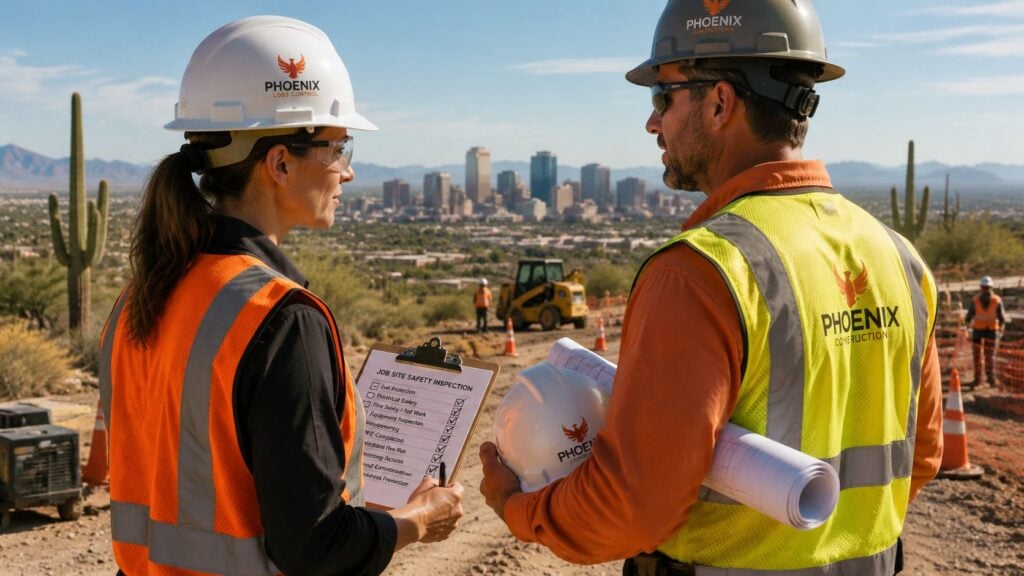
A phoenix loss control inspection, in the insurance sense, is a carrier's review of how a contractor operates. The carrier wants to see what kinds of claims are likely, how serious they could be, and whether the business manages those risks with discipline.
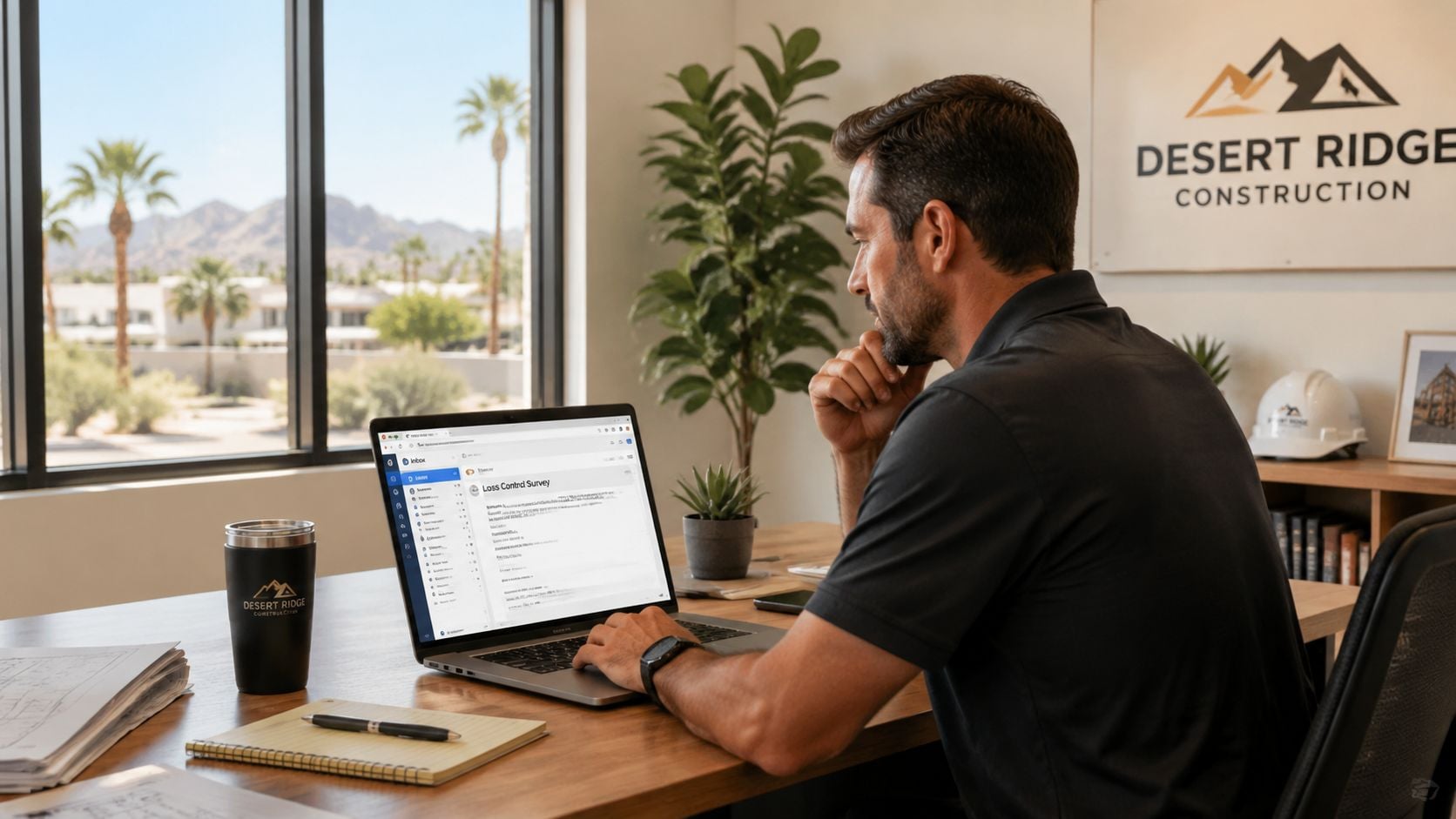
Two meanings of phoenix loss control
There is also a company called Phoenix Loss Control. It is a long-established specialist in outside plant damage recovery for cable, telecom, and utility sectors. Its BBB profile states that it specializes in recovering utility property damage repair costs and notes BBB accreditation since 8/29/2006, while the company describes an in-house process that includes investigation, responsibility determination, cost assessment, invoicing, pursuit of recovery, and legal escalation when needed, as shown on the BBB profile for Phoenix Loss Control Inc..
That business is not the same thing as a carrier loss control survey. If a grading contractor in Mesa gets a notice from the insurer, the carrier is not accusing the company of hitting a buried utility line or trying to collect money. The carrier is reviewing exposures before the next claim happens.
Practical rule: Read the sender first. If the notice came from the insurer, the wholesaler, or a field inspection vendor working for the carrier, it's an insurance risk review.
Why carriers order these inspections
For contractors, these visits are usually best treated as a free operational checkup. The inspector is trying to understand whether the company has real controls in place or whether the safety manual sits untouched in a drawer.
A strong inspection can help a contractor show that the business is stable, trainable, and insurable. A weak one can raise red flags about housekeeping, fleet management, subcontractor oversight, heat planning, or equipment security. For a drywall contractor, that might mean the difference between looking like a firm with a managed process and looking like a business that improvises every day.
Three things usually drive the visit:
- The carrier needs a current field view. Applications often summarize operations in broad terms. An inspection shows what the shop, yard, and active jobs look like.
- The market is tougher in fast-growth areas. Phoenix construction activity creates dense project overlap, heavy street exposure, and more opportunities for injury and property damage.
- Recommendations can improve terms over time. Contractors who fix the right issues quickly often present better at renewal than contractors who argue with obvious problems.
A good way to think about it is this. The insurer is checking whether the company's real-world risk factors for contractors match what was represented on paper.
Jobsite Risks Unique to Contractors in Arizona
A loss control review in Arizona isn't a generic clipboard exercise. It works more like a pre-game walkthrough. The inspector is looking for the local conditions that turn ordinary construction work into expensive claims.
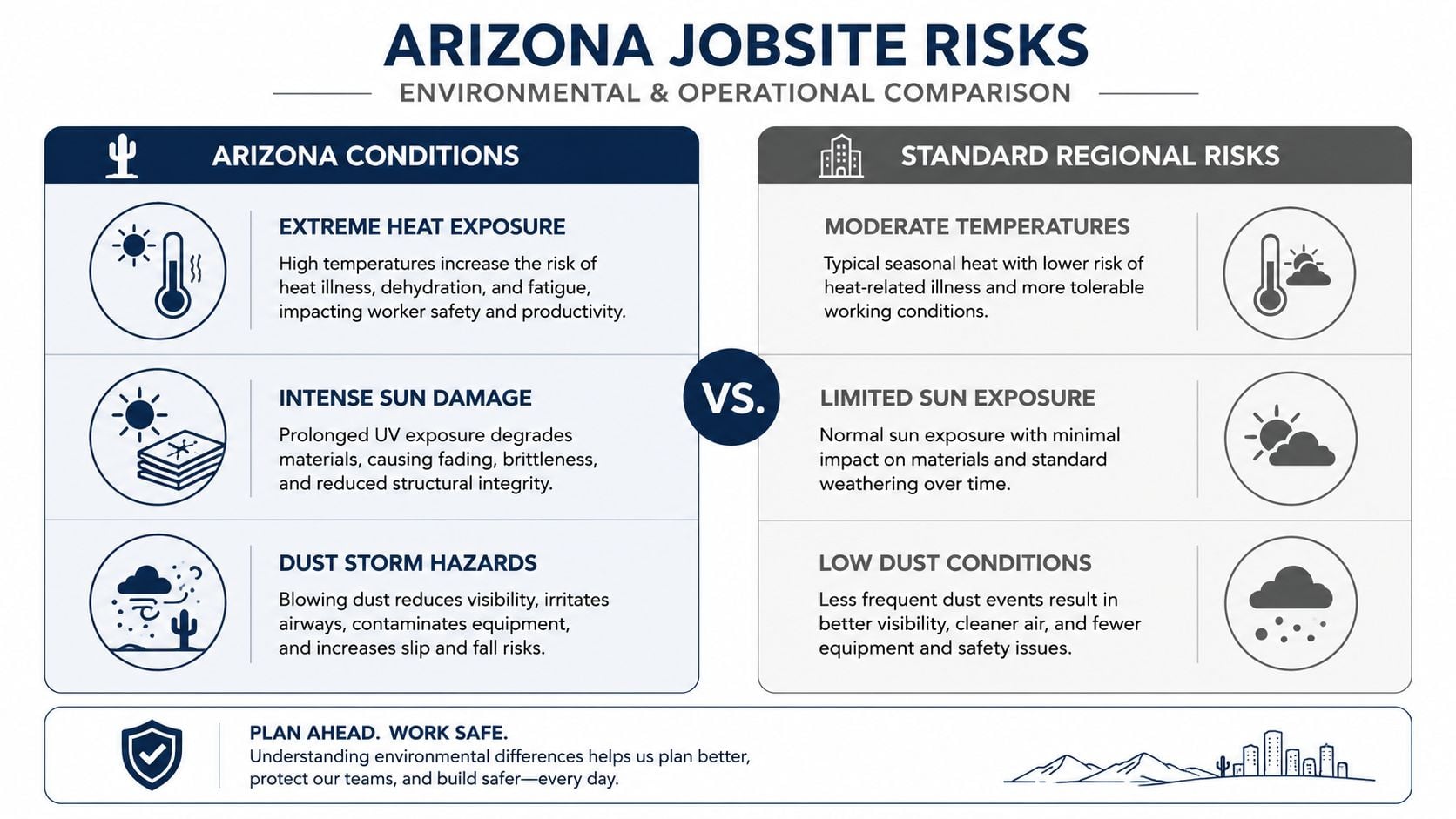
Arizona changes the inspection lens
Heat sits near the top of the list. According to CDC reporting on heat-related deaths and illness rates, more than 400 workers have died from heat exposure since 2011, and Arizona's heat-related illness rate ranked third highest in the nation in 2022. That puts written heat plans, water access, shade, acclimatization, and supervisor response procedures squarely in the center of a Phoenix inspection.
A framing crew offers a clear example. If the crew starts at dawn but has no written plan for hydration breaks, no process for new workers during extreme heat, and no foreman training on early symptoms, the inspector won't treat that as a small paperwork gap. It shows a system failure. On the other hand, a crew with documented tailgate talks, a break schedule, and emergency response instructions usually looks organized and coachable.
Small defects are fixable. Repeated signs that nobody owns the safety process are what worry carriers.
Five local exposures that get attention
Some Arizona risks are environmental. Others are operational. Both affect claims.
- Extreme heat on outdoor crews. Roofers, concrete finishers, exterior site crews, and paving crews face obvious exposure, but warehouse staff and shop techs can also get flagged when ventilation is poor. A single heat event can become a workers compensation claim, a lost-time issue, and a staffing problem in the same week.
- Wildfire-adjacent work. Jobs near desert edges or residential areas built close to brush get extra scrutiny. A steel crew doing grinding near dry vegetation without spark control and cleanup creates a very different liability profile than the same task on an urban infill site.
- Dust and storm-driven site disorder. Dust affects visibility, respiratory protection, cleanup, and equipment wear. Monsoon conditions can also turn poor material storage and erosion control into property damage or slip hazards.
- Sun and UV exposure. This is easy to ignore because it feels routine in Arizona. For trades like roofing and exterior painting, poor planning around exposure often shows up as inconsistent PPE use, rushed work, and more fatigue-related mistakes.
- Road exposure across the Valley. Contractors spend a lot of time moving between jobs. Electricians, HVAC crews, and plumbers often have vans loaded with tools, ladders, and parts, which means auto claims and theft exposure can rise together.
A general contractor reviewing operations through an Arizona lens should compare each exposure to the firm's actual trade mix. A remodeler managing a few homes in town won't present the same profile as a general contractor operation with multiple active sites and subcontractor traffic.
How Loss Control Findings Affect Your Insurance Premiums
Loss control reports don't stay in a folder. Underwriters use them. That means the inspection can affect pricing, eligibility, deductibles, and how much flexibility the carrier offers at renewal.
What underwriters do with the report
In plain language, the carrier is deciding whether the business deserves preferred treatment, standard treatment, or tighter terms. Good reports can support premium credits, which are discounts tied to favorable conditions and safety practices. Poor reports can lead to premium debits, which are added charges tied to greater expected loss severity or frequency.
A formal program matters. A study published by a major commercial insurer states that businesses implementing a carrier-recommended loss control program can reduce workers' compensation claim frequency by over 50% and may see average premium reductions of 5% to 15% through safety-related credits, according to The Hartford's workers compensation loss control discussion. For contractors, that's the difference between safety as overhead and safety as margin protection.
Anyone reviewing this issue should connect it directly to workers compensation insurance for contractors, because many of the findings that carriers care about first show up in employee injury exposure.
Five short stories that show the money side
An HVAC contractor with a written fleet policy, driver MVR review, dash documentation, and phone-use rules usually gives the underwriter confidence. If the same company has repeated backing incidents, no vehicle inspection logs, and no supervisor follow-up, the commercial auto side gets harder to defend.
A masonry subcontractor with a real heat protocol can look materially different from a similar company that just tells workers to “drink water.” One business has evidence. The other has hope.
A painter working in a brush-adjacent subdivision may get pressed on spark sources, flammable storage, and cleanup discipline if the scope includes surface prep. The concern isn't theoretical. If debris control is sloppy, the carrier may see a wildfire liability problem instead of a simple painting account.
A roofing contractor with brittle ladders, poor harness storage, and faded rope grab equipment tends to trigger broader concern than just “replace this item.” The report may suggest the company also lacks supervision, replacement schedules, and training verification.
A service plumber with organized vans, secured pipe machines, and documented overnight parking rules usually presents better than a company that leaves expensive gear loose in vehicles. Tool theft, auto losses, and property claims often travel together in the carrier's view.
A loss control report doesn't just price one problem. It shapes the underwriter's opinion about how the whole company is run.
What to Expect During the On-Site Inspection
Most inspections are straightforward when the contractor treats them like a business meeting instead of a confrontation. The field representative is usually there to review operations, documents, and physical conditions, then send a report to the carrier.
The meeting before the walk
The visit often starts with a short conversation in the office, shop, or trailer. The inspector may ask for a description of current work, payroll split by class, subcontracted trades, vehicle count, and the percentage of work done for residential, commercial, or industrial clients.
Questions usually get practical fast. A plumbing contractor may hear questions like these:
- Safety manual and training. Can the company show a written program, toolbox talk records, and how new hires are trained before going to a site?
- Subcontractor controls. How does the business verify certificates of insurance, additional insured status, and contract transfer language?
- Equipment management. Who inspects ladders, compressors, trench protection, and job boxes, and where is that documented?
- Loss response. When an employee gets hurt or a vehicle backs into another car, who investigates and what gets recorded?
That conversation matters because it shows whether management can explain the system clearly. If answers are vague, the inspector often assumes the field execution is also vague.
What the field review usually covers
The walkthrough usually starts at the shop or yard. The inspector may look at housekeeping, extinguisher placement, fuel storage, chemical labeling, electrical panels, ladder condition, and how tools are stored in vehicles. Then the review moves to a jobsite if one is available.
A site tour commonly focuses on visible loss drivers:
| Area | What often gets reviewed |
|---|---|
| Shop and yard | Housekeeping, storage, extinguisher access, slip hazards, security |
| Fleet | Vehicle condition, backup damage indicators, load securement, inspection habits |
| Jobsite access | Signage, perimeter control, public exposure, pedestrian interface |
| Active work | Fall protection, PPE use, trench safety, hot work controls, ladder setup |
| Supervision | Foreman presence, hazard correction, how crews document daily issues |
For a plumbing contractor on a commercial tenant improvement job, the inspector may ask to see confined space procedures if applicable, then look at trench protection, cylinder storage, and vehicle organization. If expensive drain machines and press tools are left unsecured, the conversation may also spill into contractors tools and equipment insurance concerns.
The cleanest inspections happen when one manager walks with the inspector and can answer operational questions on the spot.
Your Pre-Inspection Checklist and Documentation
Preparation changes the tone of the entire visit. Contractors who gather records in advance usually come across as disciplined, even if a few field issues still need correction.
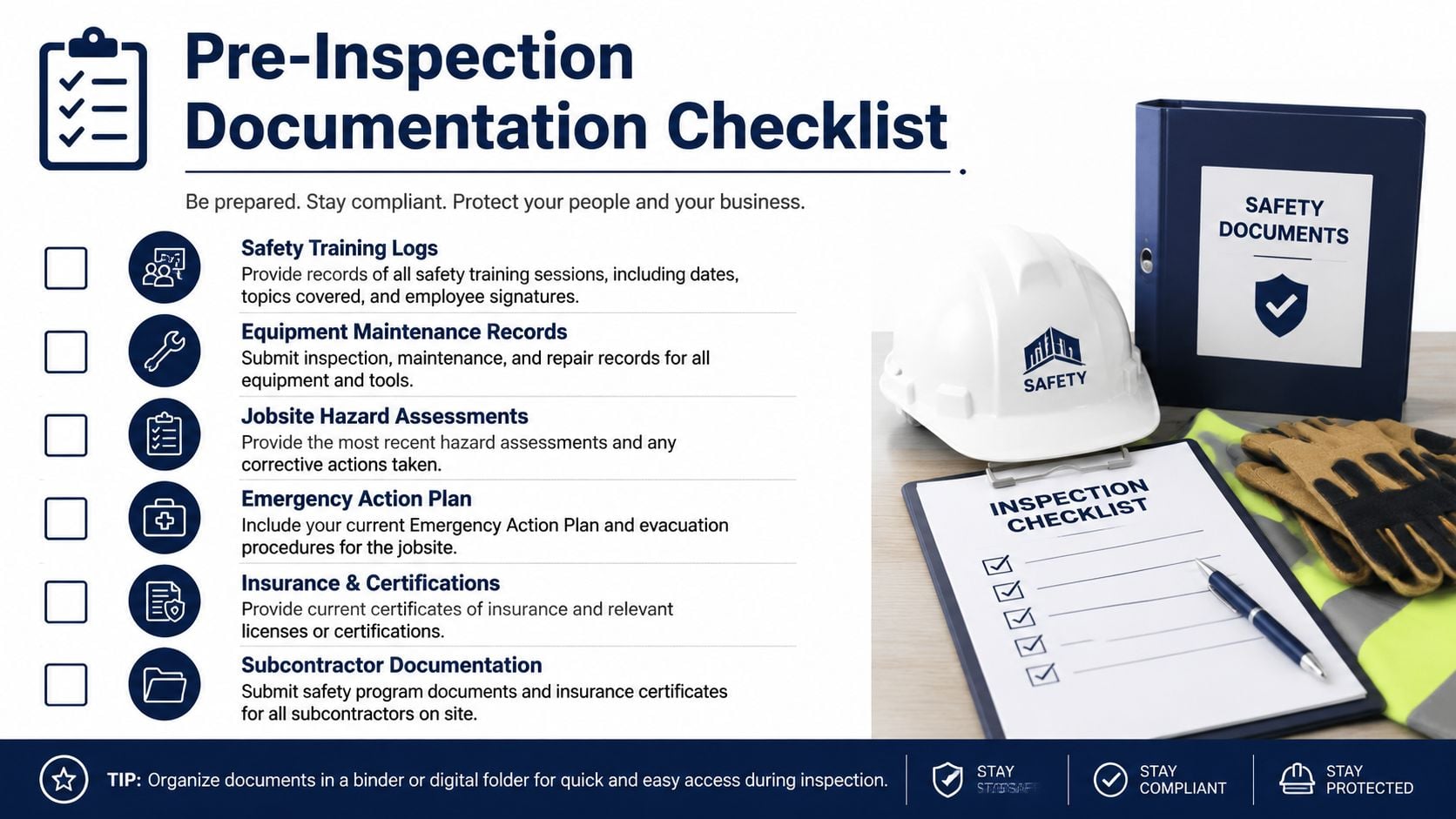
What to pull before the appointment
Start with documents that prove the company does what it says it does. A verbal answer helps, but paper or digital records carry more weight.
For a painting contractor, that means more than having a binder labeled “Safety.” It means producing respirator records if respirators are used, flammable liquid storage checks if coatings and solvents are stored, vehicle inspection logs if crews drive daily, and proof that supervisors hold safety talks.
A useful prep list looks like this:
- Written programs. Safety manual, hazard communication materials, heat illness procedures, fleet safety rules, accident reporting steps.
- Training proof. New hire orientation records, toolbox talk logs, trade-specific certifications, supervisor training notes.
- Fleet and equipment records. Vehicle maintenance files, driver lists, inspection forms, repair logs, ladder and tool replacement notes.
- Subcontractor files. Current COIs, signed agreements, and any internal checklist used before a sub starts work.
- Jobsite forms. Daily reports, incident investigations, hot work permits where relevant, and hazard assessments.
Field-tested advice: If a document exists but no one can find it during the visit, the carrier usually treats it as if it doesn't exist.
Key documents for your loss control inspection
Below is a simple working table contractors can adapt.
| Document Category | Examples |
|---|---|
| Safety Programs | Safety manual, hazard communication plan, heat illness plan, emergency procedures |
| Employee Training | New hire orientation, weekly toolbox talks, PPE training, supervisor meeting notes |
| Fleet and Drivers | Driver list, vehicle inspection forms, maintenance records, accident review notes |
| Equipment | Ladder inspections, compressor service logs, lift checks, serial number inventory |
| Subcontractor Management | Certificates of insurance, signed contracts, onboarding checklist, scope review notes |
| Jobsite Controls | Daily hazard analysis, hot work permit, housekeeping checklist, incident reports |
Two simple templates also help.
Training log template
| Date | Employee name | Topic | Trainer | Signature |
|---|
Equipment maintenance schedule
| Equipment | Last service date | Condition | Next action | Responsible person |
|---|
For contractors with frequent truck break-ins or disappearing jobsite gear, inspection prep should also include a review of tool and equipment theft risk controls. Inspectors notice whether theft prevention is a real procedure or just an after-hours hope.
Using Inspection Results to Improve Your Insurance Program
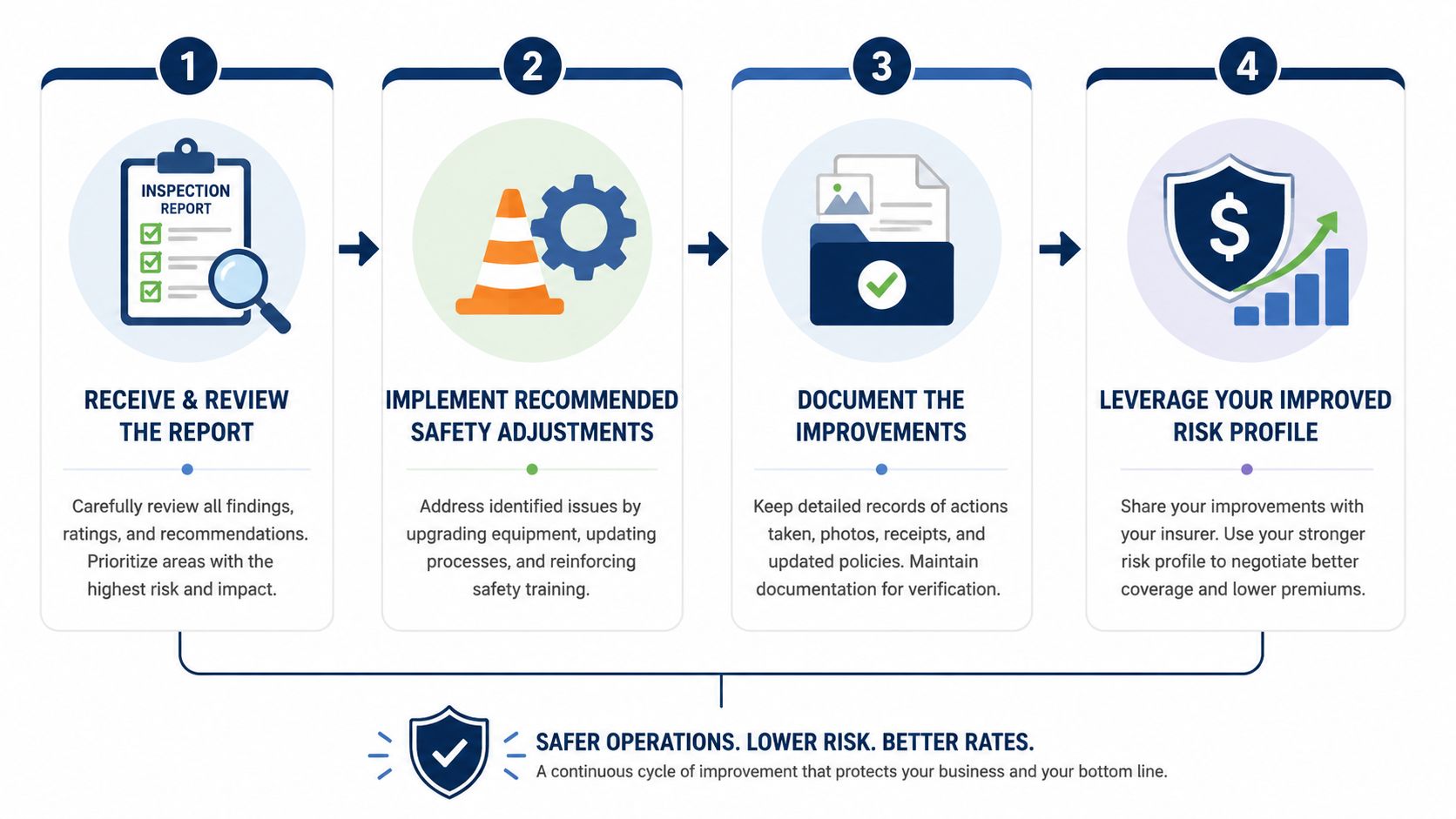
The report after a phoenix loss control inspection isn't a final grade. It is a priority map. The contractors who get value from it are the ones who sort findings by severity, cost, and speed to fix, then document every correction.
Treat recommendations like a priority list
Not every recommendation carries the same weight. A missing extinguisher tag matters, but it usually doesn't belong in the same urgency bucket as unprotected roof edges, repeated driver issues, or unmanaged hot work near dry vegetation.
Arizona contractors working near the wildland-urban interface need to pay close attention here. The U.S. Fire Administration's wildland-urban interface guidance notes that these areas are rapidly growing, and Arizona construction in those zones puts a spotlight on hot work and site debris management because a single spark can create severe liability. For a welding subcontractor in a brush-adjacent development, cleanup and spark control aren't side issues. They can define the account.
A practical triage model works well:
- Urgent liability issues. Fall exposure, trench exposure, wildfire-adjacent hot work, major fleet safety problems.
- Operational weaknesses. Missing training logs, poor housekeeping trends, inconsistent supervisor documentation.
- Administrative cleanup. Outdated manuals, unsigned forms, incomplete file storage.
How better documentation becomes leverage
The smartest move after the inspection is to build a response file. That file should include the recommendation, the corrective action, the date completed, photos if relevant, and any revised policy or training record tied to the fix.
For example, if the report flags unsecured oxy-fuel cylinders, weak extinguisher placement, and no written hot work permit process, a contractor should do more than fix the issue once. Better practice is to create a cylinder storage rule, train foremen, photograph corrected storage, and save the first round of completed permit forms. That turns a carrier concern into evidence of operational control.
Many businesses overlook a key advantage. They make improvements but don't package them. At renewal, the underwriter still sees the old concern unless someone presents the corrected picture clearly.
Good documentation helps the carrier see change. Without it, the report can follow the account longer than the problem itself.
When contractors use the inspection this way, they improve more than safety. They create a stronger renewal narrative, defend premium requests more effectively, and put themselves in a better position when a carrier questions scope, fleet growth, or subcontractor controls.
A contractor who wants a cleaner renewal, fewer surprises, and coverage that fits the actual work can get a free review from Coverage Axis. A licensed advisor can compare the current insurance program to the company's real jobsite exposures, flag gaps before the next carrier inspection, and help build a stronger package for quotes or renewal.