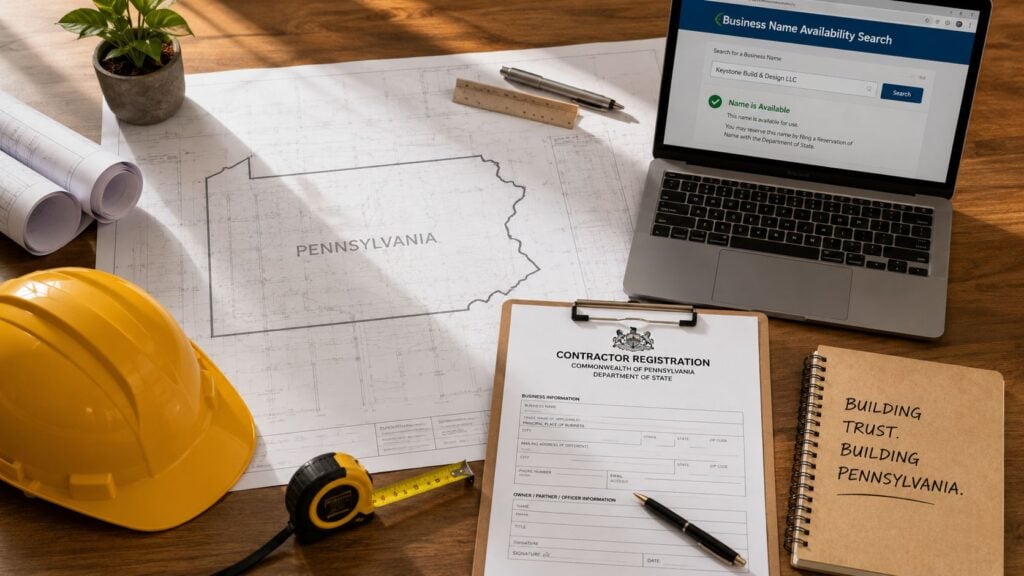
A Pennsylvania contractor often reaches the same point. The legal business name on formation papers feels too formal or too broad, but the name on the truck, estimate sheet, and yard sign needs to sound like the trade. An electrician may be organized as John Doe LLC but wants customers, builders, and property managers to see Ampere Electric.
That sounds simple until the first serious bid lands. The contract asks for the legal business name. The insurance certificate has to match. The bond paperwork has to line up. If the names don't connect cleanly, the issue stops being branding and turns into a paperwork problem that can slow down a job before the crew even unloads material.
Table of Contents
- Should You Use a Trade Name for Your Contracting Business
- What a Fictitious Name Legally Means for PA Contractors
- The Official Process to Register Your DBA in PA
- How to List Your DBA on Insurance Policies and COIs
- DBA Compliance Checklist for Solo vs Corporate Contractors
- Common DBA Pitfalls and How to Avoid Them
- Put Your Business Name to Work the Right Way
Should You Use a Trade Name for Your Contracting Business
A trade name can make a contractor easier to remember, easier to market, and easier to place on a truck door. That matters when a plumber wants a sharper residential brand, or when a GC wants one public-facing name across remodeling, light commercial work, and service calls. Customers usually respond to the name they can picture, not the legal entity name buried in formation records.
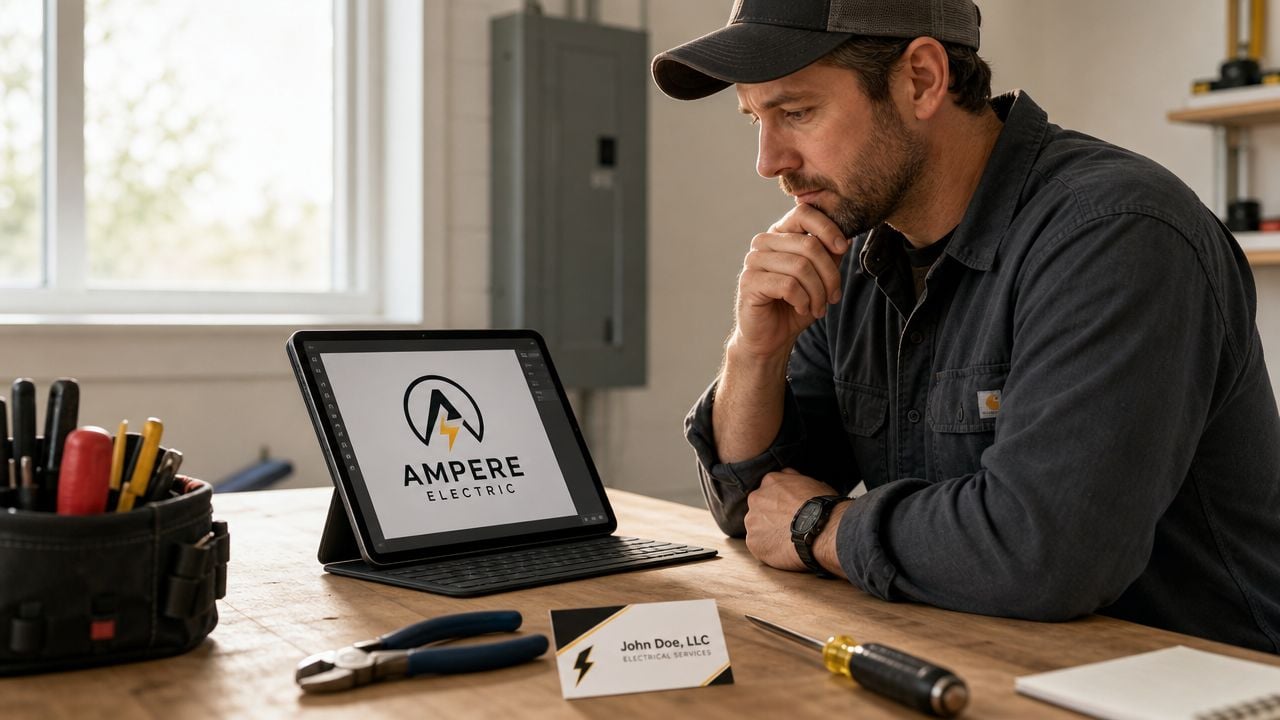
An electrician using a trade name like Ampere Electric may look more established on a proposal than a personal name alone. On the sales side, that can help. On the admin side, it only works if the trade name is tied back to the actual business that signs contracts, buys insurance, and pays claims.
Practical rule: If the name is going on bids, invoices, jobsite signs, or uniforms, it needs to be handled as an operating name, not just a logo idea.
For contractors, the question isn't just whether a name sounds better. The real question is whether the name will work cleanly across four places that matter every week:
- Bids and contracts: The owner or GC wants to know exactly who is taking the job.
- Insurance documents: Certificates and policy records have to connect the operating name to the legal insured.
- Banking and payments: Deposit issues start fast when checks are written to a name the bank doesn't recognize.
- Licensing and compliance files: Any mismatch can trigger delays when a municipality, project owner, or bond underwriter asks for supporting records.
A trade name is useful when it supports growth and keeps the business easier to recognize. It causes headaches when the branding team gets ahead of the paperwork. Contractors sorting through bonding and insurance setup usually run into the same issue, which is why it helps to understand how contractors get bonded and insured before the new name starts appearing on formal job documents.
What a Fictitious Name Legally Means for PA Contractors
Pennsylvania doesn't use the term DBA as the formal legal label. The state calls it a fictitious name. For contractors searching "dba in PA," that's the term that matters on state forms and agency guidance.
What the state is actually asking for
Pennsylvania says that any individual, sole proprietorship, partnership, corporation, LLC, or other association doing business under a name other than its proper legal name must register that name with the Department of State. The filing must include the fictitious name, a brief statement of business activity, and the principal place of business address. A P.O. box by itself isn't acceptable. The state also requires publication in two newspapers of general circulation in the county where the business will be located, and one of those must be a legal newspaper unless only one newspaper exists in the county, according to the Pennsylvania fictitious name requirements.
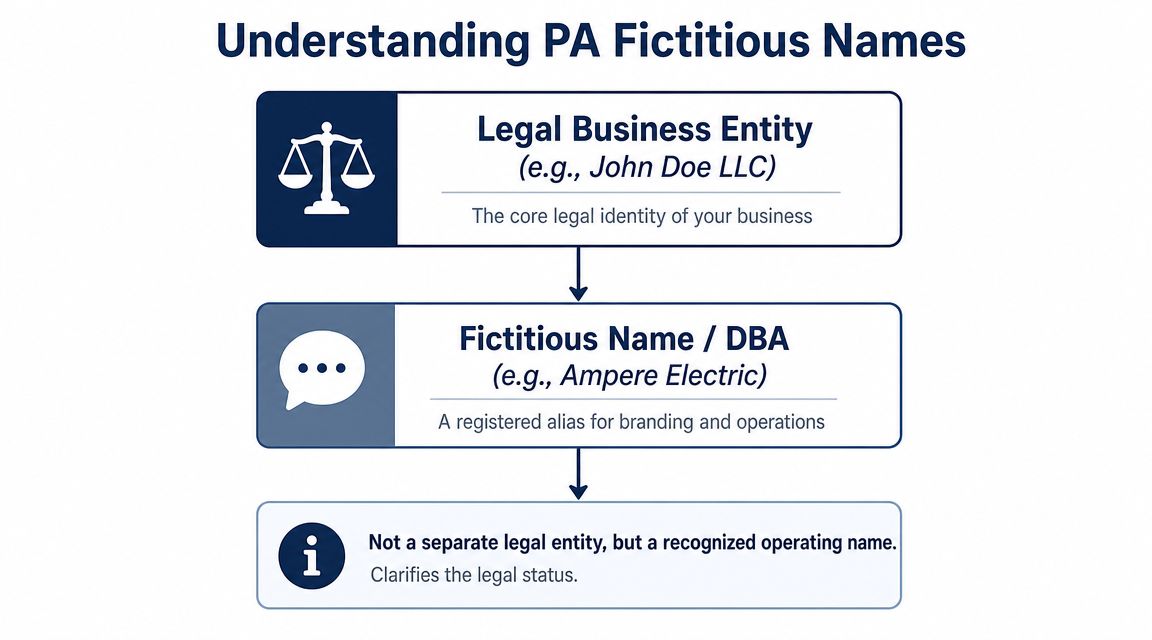
That sounds technical, but the field meaning is simple. A fictitious name is the operating alias the public sees. The underlying business is still the party on the hook.
A plumbing example makes this clearer. If Jane Smith operates as a sole proprietor and uses AquaFlow Plumbing as the trade name, a failed fitting that floods a finished basement doesn't somehow redirect liability to "AquaFlow Plumbing" as if it were a separate company. The legal exposure still follows the actual business structure behind the name.
What a fictitious name does not do
A Pennsylvania fictitious name doesn't create a separate business entity. It doesn't replace an LLC, and it doesn't give a sole proprietor a liability shield. That's where many contractors get the wrong impression.
A trade name helps customers recognize the business. It doesn't change who the law or the insurer sees as the insured party.
That point matters in construction because paperwork travels. A subcontract, a waiver, a certificate of insurance, and a bond request may all be reviewed by different people. If the branding name appears everywhere but the legal entity is unclear, a simple naming issue can turn into a dispute over who agreed to the work.
Contractors dealing with hold harmless language and indemnity clauses should also understand contractual liability in construction agreements, because the name on the document and the party assuming obligations need to line up.
The Official Process to Register Your DBA in PA
The mechanics of a DBA in PA aren't hard, but contractors still miss details because they treat the filing like a side errand. It isn't. If the new name is headed onto a quote, truck wrap, or proposal package, the registration should be handled before the business relies on that name to win and service work.
Start with the name search
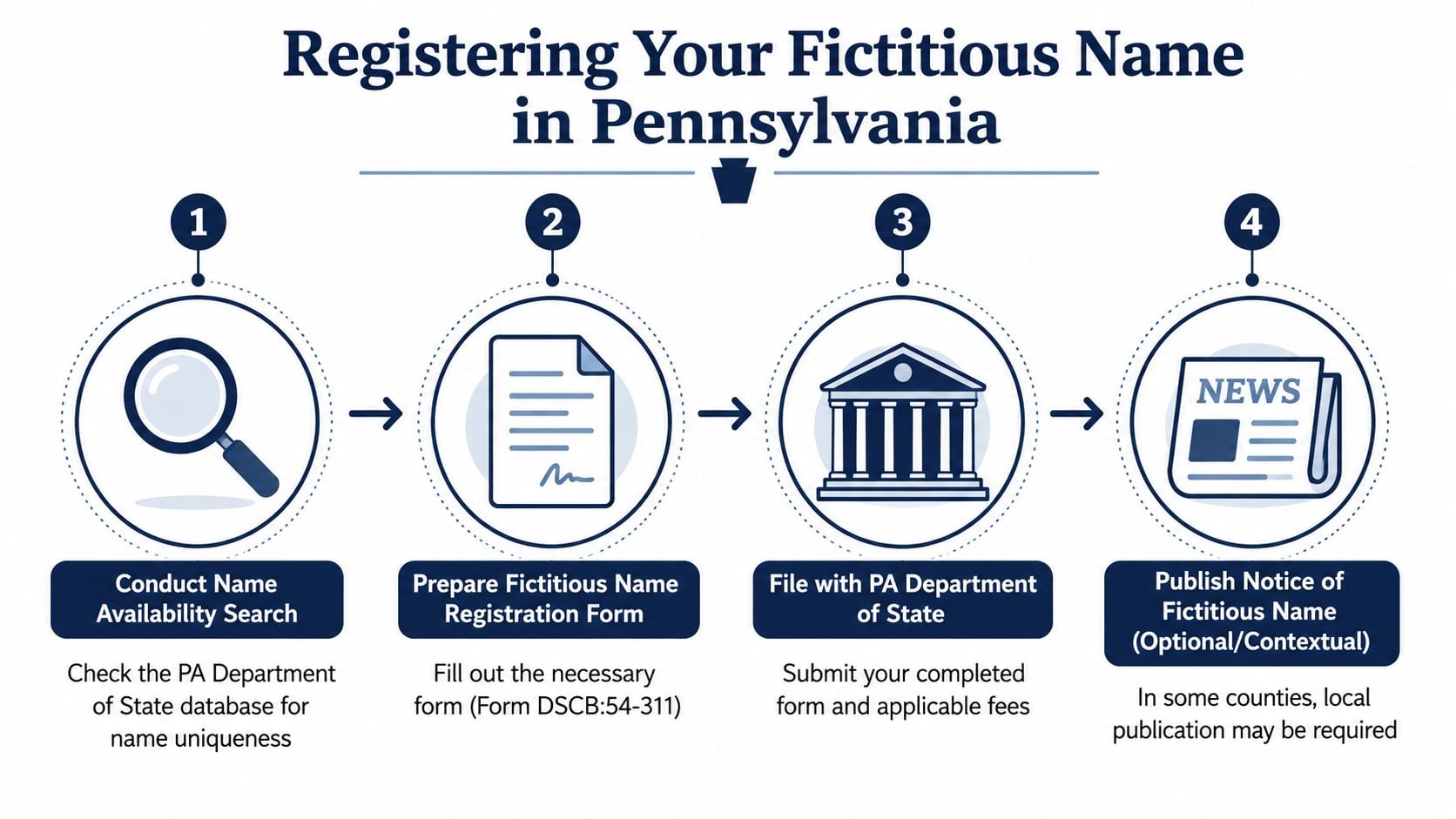
The first move is practical. Check the Pennsylvania business database and see whether the name is already in use or creates a conflict. Contractors often pick names that sound strong on a van but run into issues because the wording implies a business type they don't have, or because the name is too close to an existing filing.
A roofer in Allegheny County might settle on Keystone Peak Roofing for branding reasons. Before ordering signs, estimate forms, and embroidered gear, the name needs to be cleared against the state database and reviewed with an eye toward how it will appear on legal paperwork.
For contractors working in multiple states, it can also help to compare naming workflows elsewhere. A concise example is this guide on securing your business name in Connecticut, which shows how state-specific naming rules can change the filing path even when the business goal is the same.
File before the name hits contract paperwork
Pennsylvania's current filing cost for a fictitious name is $70, and online filings are typically processed in about 5 to 10 business days, according to this Pennsylvania DBA filing guide. That same guide also notes an important rule from the state: failure to register a fictitious name doesn't void the contract, but it does prevent enforcement until registration occurs.
For a contractor, that timing matters more than most legal guides admit. A drywall subcontractor can submit a bid under a fresh trade name, win the work, and then find out the paperwork chain is weak when the project stalls, payment gets delayed, or a dispute arises. The contract may still exist, but the business doesn't want enforceability issues hanging over a receivable.
Field takeaway: Register the name before it appears on a serious bid package, not after the first signed job.
The filing itself belongs with the Pennsylvania Department of State, not the county. The form referenced for this filing is the Registration of Fictitious Name, commonly identified as Form DSCB:54-311.
Don't miss the newspaper notice
The publication requirement is where many contractors slip. Pennsylvania requires official publication in local newspapers as covered earlier, and that step isn't just old-fashioned formality. It's part of finishing the process correctly.
The practical effect depends on where the business operates. A roofing contractor in a more populated county may have multiple newspaper options and a clearer path to a legal newspaper. A rural excavation contractor may have fewer publication choices and needs to verify what satisfies the county requirement before assuming one notice is enough.
A clean filing workflow usually looks like this:
- Verify availability first: Search before spending money on wraps, cards, or proposal templates.
- Prepare the registration carefully: Use the exact operating name and the official principal business address.
- Submit the filing with the state: Don't send it to the wrong office and assume it will sort itself out.
- Complete publication as required: Keep proof with the business records.
- Sync the name everywhere else: Banking, tax files, payroll, licenses, insurance, and bond forms should all follow.
Contractors bidding public or larger private work should also review contractor bonding requirements early, because the business name on bond requests needs to match the entity and operating name structure already in use.
How to List Your DBA on Insurance Policies and COIs
Insurance is where many DBA mistakes finally surface. The truck may be lettered, the website may be live, and the invoices may already carry the new name. Then the general contractor asks for a certificate of insurance, and the name on the request doesn't match the insured on the policy.
The policy should follow the legal entity
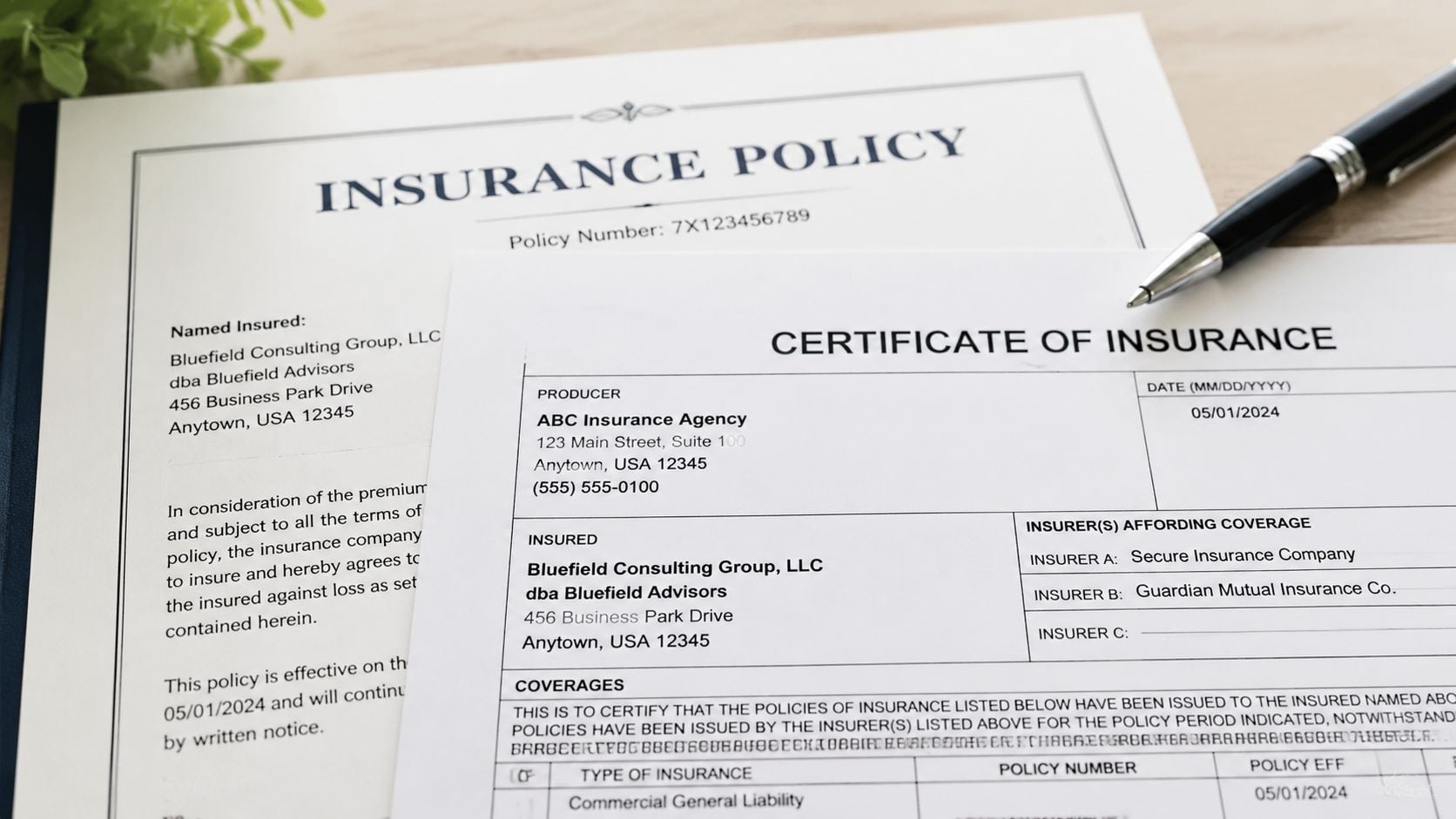
Insurance carriers underwrite the actual business, not just the public-facing brand. That means the legal entity should be the named insured, and the trade name should be shown in a way the carrier accepts, such as an alias or DBA reference tied to that legal insured.
This matters for an HVAC contractor using a sharper service brand. If the legal company is Ridge Mechanical LLC but the vans and proposals say Comfort Furnace & Air, the insurance paperwork has to connect those names. Otherwise, an owner, builder, or property manager may see a mismatch and treat the certificate as incomplete.
The practical places to check are straightforward:
- Policy declarations: The legal entity should be correct.
- Certificate requests: The requesting party may want to see the trade name they hired.
- Additional insured endorsements: These should match the contracting party relationships already documented.
- Bond applications and license records: The same naming structure should carry across all files.
Where contractors get tripped up
A common breakdown happens when the certificate request comes in under the trade name alone. The carrier or agent can issue a COI, but the document has to reflect the insured correctly. If the paperwork only shows one name and the contract shows another, the project administrator may reject it until the record is cleaned up.
That can delay site access, draw schedules, or final payment. For a subcontractor, that is a cash-flow problem, not just an admin nuisance.
The name on the certificate shouldn't surprise the person reviewing the contract.
This gets more complicated when a contractor uses a payroll company or PEO structure for workers compensation administration. In those setups, certificate handling becomes even more sensitive, which is why this guide on navigating PEO workers compensation requirements is useful background for contractors trying to understand how name presentation affects certificates.
A solid instruction to the insurance advisor usually includes three points:
- The legal entity name
- The registered fictitious name
- Where each name appears in contracts, invoices, and COI requests
That gives the advisor a clean path to request the right presentation from the carrier. Contractors who haven't reviewed how certificates are structured can also look at this certificate of insurance template overview to understand what project admins are checking.
DBA Compliance Checklist for Solo vs Corporate Contractors
A DBA in PA doesn't land the same way for every business structure. The branding benefit may look similar, but the legal and insurance consequences are different for a sole proprietor than for a corporation or LLC.
A self-employed outdoor service provider using a trade name may be trying to look more established in neighborhood marketing. A general contractor operating through an LLC may be trying to separate the public brand from the legal company name used across payroll, tax, and insurance records. Same idea on the surface. Different stakes underneath.
DBA Compliance Checklist for Solo Operator vs. LLC Corporation
| Consideration | Solo Proprietor (e.g., "Joe the Plumber") | LLC/Corporation (e.g., "JTP Services, LLC" DBA "Joe the Plumber") |
|---|---|---|
| Liability landing point | Liability generally follows the individual behind the business if there's no separate entity. The trade name doesn't change that. | Liability protection depends on the underlying entity and how it is maintained. The trade name doesn't create that shield. |
| Bank account setup | The bank will usually want records that connect the trade name to the owner before accepting checks payable to the DBA. | The bank will usually want the LLC or corporation records plus the fictitious name filing to connect deposits and account use. |
| Contracts and invoices | The paperwork should make clear who the actual contractor is, even if the customer mainly sees the trade name. | The legal entity should remain clear, with the DBA shown as the operating name where appropriate. |
| Insurance naming | The insured should line up with the actual business structure, not just the brand on the yard sign. | The legal entity should anchor the policy, with the DBA reflected consistently across certificates and supporting records. |
| Licensing and permit files | The owner should confirm whether local records need the legal individual name, the trade name, or both. | The entity name should align with licenses, permits, payroll, tax, and insurance documents, with the DBA added where accepted. |
| Payment collection | Check and ACH issues are more likely if the customer only knows the trade name and the bank only recognizes the owner name. | Accounts receivable runs smoother when the LLC or corporation and the DBA both appear consistently across contracts and billing. |
Checklist rule: If a contractor can't explain on one page how the legal name and trade name connect, the back office isn't ready for larger jobs.
This difference becomes more important as a contractor grows into larger project requirements. A business bidding higher-value work often has to satisfy stricter insurance and documentation standards, so it helps to understand general contractor insurance requirements before the name issue causes a bid delay.
Common DBA Pitfalls and How to Avoid Them
Most DBA trouble doesn't come from the filing itself. It comes from assumptions contractors make after the filing is done. The name gets approved, the logo goes on the truck, and the business starts acting as if the paperwork now carries legal force it doesn't have.
The expensive misunderstandings
One of the biggest mistakes is assuming the fictitious name creates its own liability barrier. It doesn't. Pennsylvania guidance discussed by Duquesne SBDC makes clear that a fictitious-name filing is administrative, not structural, and it doesn't create a separate legal entity or liability protection by itself, as explained in this Duquesne SBDC overview of Pennsylvania DBAs.
Another mistake is sloppy follow-through after the filing. Contractors may register the name but fail to carry it across proposals, invoice templates, insurance records, and bank instructions. A restoration contractor can finish emergency work quickly, submit a bill under a trade name, and then hit resistance when the customer or insurer sees different names across supporting documents.
The third problem is timing. Pennsylvania says failure to register doesn't void the contract, but it can prevent enforcement until the name is properly registered. For a contractor trying to collect on unpaid work, that is a bad time to discover the filing was never completed correctly.
The practical fix
A cleaner approach is boring, which is exactly why it works:
- Treat the DBA as branding plus compliance: Use it to market the business, but never confuse it with a new legal entity.
- Finish the publication requirement: Don't assume the filing alone closes the loop.
- Standardize every form: Contracts, COIs, W-9 records, invoices, checks, permit applications, and bond paperwork should tell the same naming story.
- Watch entity-style wording: A sole proprietor or partnership shouldn't use wording that suggests a corporation or LLC if that structure doesn't exist.
A mismatch rarely causes trouble on the easy jobs. It shows up when payment is late, a claim is filed, or a project admin asks for backup.
For trades like fire restoration, roofing, and emergency plumbing, paperwork often moves fast because the work starts fast. That speed makes naming discipline more important, not less.
Put Your Business Name to Work the Right Way
A DBA in PA is useful for contractors because it gives the business a marketable name customers remember. But the value only holds when the name is registered correctly and carried through insurance, contracts, banking, and license records without gaps.
That is where many businesses either look polished or look disorganized. Contractors trying to tighten the branding side of the business may also find practical ideas in The Cherubini Company's contractor marketing advice, especially when the goal is to connect name recognition with steady lead flow.
If a Pennsylvania contractor isn't sure whether a fictitious name is set up correctly on policies, certificates, or bond paperwork, a free review can prevent expensive delays. Coverage Axis offers free quotes and no-obligation coverage reviews for contractors who need their legal business name and trade name aligned the right way.